

How to Know When to Replace Your Brake Pads
Your car’s ability to stop safely is something you probably take for granted—until it doesn’t work as it should. Your brake pads are the single most critical component in this system, and they wear down with every mile you drive.
If you’ve ever found yourself searching online for “when to replace brake pads,” you’re already being a proactive and safe driver. At Car Fix, we know that recognizing the early warning signs not only keeps you safer but can also save you from much more expensive repairs down the line. Let’s break down what you need to look and listen for.
5 Telltale Signs You Need New Brake Pads
Your vehicle is great at giving you clues when something is wrong. When it comes to your brakes, these are the red flags you should never ignore:
- High-Pitched Squealing: This is the most common and earliest warning. Most brake pads have a built-in metal wear indicator that makes a sharp squealing or screeching noise when the pads are getting thin. Think of it as your car’s polite way of asking for a check-up.
- Deep, Harsh Grinding: If the squealing has turned into a metallic grinding or growling sound, it’s a critical alert. This often means your brake pads are completely worn away, and now metal is grinding against metal. This can quickly damage your brake rotors, turning a simple pad replacement into a much costlier repair.
- Vibrations or Pulsating: Do you feel a shudder or vibration through your steering wheel or brake pedal when you slow down? This pulsating sensation is often a symptom of warped rotors, which can be caused by worn-out pads or excessive heat.
- A “Spongy” or Unresponsive Pedal: Your brake pedal should feel firm and responsive. If it feels soft, spongy, or goes closer to the floor than usual, it could indicate a problem with the brake fluid or a leak in the brake lines.
- Dashboard Brake Warning Light: This one is impossible to miss. If your brake warning light comes on, your car’s onboard diagnostic system has detected a problem. It could be low fluid or a sensor issue, but it’s a clear signal to get a professional inspection.
The average brake pad lifespan is around 45,000 miles, but actual wear varies widely by driving style and conditions. They recommend checking pads every 5,000 miles or whenever the wheels are removed.
How Often Should You Replace Brake Pads?
There’s no single answer, as brake pad life depends heavily on your vehicle and driving style. Generally, brake pads last between 30,000 and 70,000 miles. If you frequently drive in stop-and-go city traffic or navigate hilly areas, your pads will likely wear out faster.
The best practice is to have your brakes inspected with every oil change or tire rotation. This allows a technician to spot wear before it becomes a noisy, or dangerous, problem.
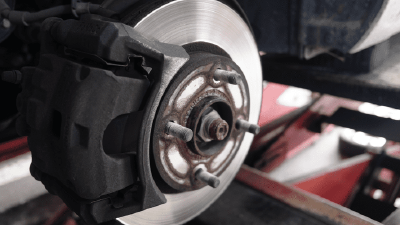
Curious about checking them yourself? If you can see the brake caliper through your wheel spokes, look for the pad material. If it appears to be less than a quarter-inch thick (about the thickness of a new pencil), it’s time to schedule a replacement..
Don’t Wait for an Emergency — Trust the Pros at Team Car Fix
Your brakes are the most important safety feature on your vehicle. At Team Car Fix, our ASE-certified technicians have the expertise to inspect your entire brake system—from pads and rotors to calipers and fluid. Whether you’re hearing a strange noise or are simply due for a routine check, we are here to provide the peace of mind you deserve.
Protect your car and your safety. Schedule your professional brake inspection with Team Car Fix today!